Botanical Overview
Commonly known as Betel Nut, this species belongs to the Arecaceae family. This species holds a prominent place in the global materia medica, with an extensive record of traditional use spanning diverse cultures and medical systems. The palm family (Arecaceae) includes trees, shrubs, and climbers with unbranched stems topped by a crown of large, compound, evergreen leaves. The flowers are small and clustered on branched inflorescences, and the fruits are typically drupes. Palms provide oils, waxes, and other useful products.
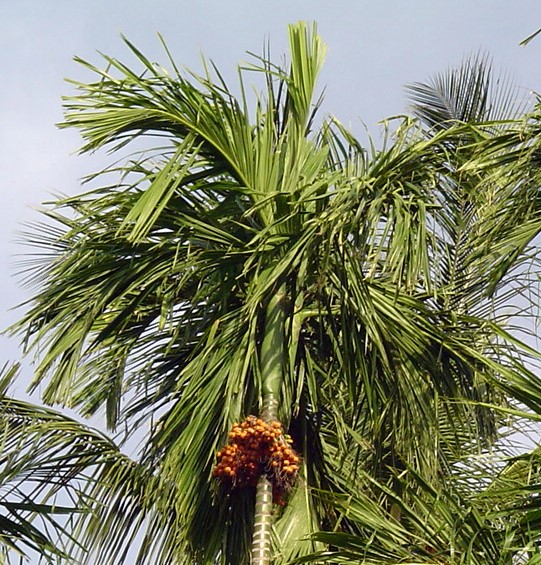
General Description
It was carried widely through the tropics by the Austronesian migrations and trade since at least 1500 BCE due to its use in betel nut chewing. It is widespread in cultivation and is considered naturalized in much of tropical Asia and in Taiwan, southern China, Madagascar, parts of the Pacific Islands, and also in the West Indies.
Family Context
The Arecaceae family is primarily tropical and subtropical. Notable medicinal members include:
- Coconut — 93 documented uses
- Date Palm — 42 documented uses
- Dragon’s Blood — 13 documented uses
- African Oil Palm — 10 documented uses
Geographic Distribution
Betel Nut has been recorded in 10 countries and territories worldwide, including China, Indonesia, India, Sri Lanka, Malaysia, and others.
Traditional Uses
Betel Nut has been traditionally used for digestive health, urinary tract health, and nervous system disorders, among other applications.
Digestive health.
- Vermifuge
- Diarrhea
- Dysentery
- Stomachic
- Ache(Stomach)
- Colic
- Dyspepsia
For digestive complaints, the herb is typically prepared as a tea or decoction taken before meals. The bitter compounds stimulate digestive secretions and improve nutrient absorption. Some traditions use the powdered root or leaves in small doses as a stomachic tonic.
Urinary tract health.
- Diuretic
- Edema
Urinary tract applications typically involve drinking the herb as a mild tea, which increases urine production and helps flush the urinary system. It may be combined with other demulcent herbs to soothe irritated tissues.
Nervous system disorders.
- Hysteria
Nervous system support involves taking the herb as a warm tea, often in the evening or before bed. The calming compounds interact with neurotransmitter systems to promote relaxation and restful sleep.
Active Compounds
Phytochemical research has identified 30 compounds in this species, including a diverse array of phytochemical classes (see the Complete Chemical Inventory below for the full list).
The identified compounds include the following categories:
- Phenolic: antioxidant compounds that neutralize free radicals
- Sterol: cholesterol-like compounds with anti-inflammatory properties
- Alkaloid: nitrogenous compounds with diverse pharmacological activities