Cherimoya

Botanical Overview

Cherimoya (Annona cherimola) belongs to the Annonaceae family. While not among the most extensively documented medicinal plants, this species has recorded uses that warrant attention from researchers and practitioners. The custard-apple family (Annonaceae) includes trees and shrubs with simple, alternate leaves and distinctive three-petaled flowers. The fruits are typically fleshy aggregates of berries. Many species produce acetogenins and isoquinoline alkaloids with potent biological activity.
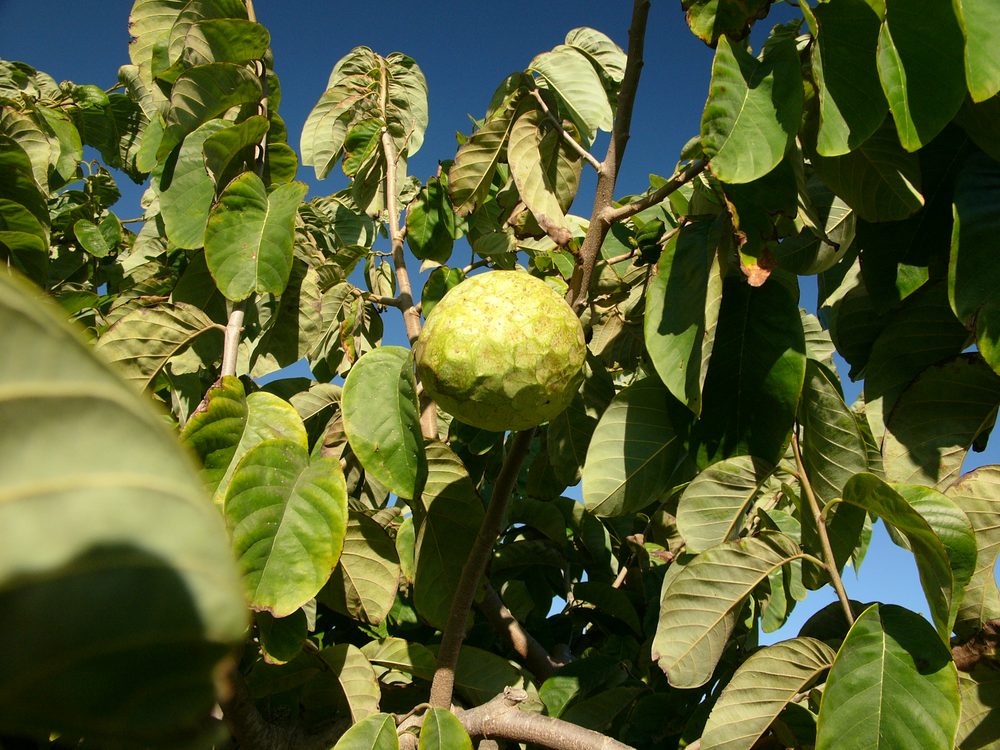
General Description

Native to mountainous regions of Honduras and Guatemala, the plant has a long history of cultivation in the Andes and Central America.

ⓘ Information
Description adapted from Wikipedia (CC BY-SA 4.0).

Family Context

The Annonaceae family is widely distributed. Notable medicinal members include:

Geographic Distribution

Cherimoya has been recorded in 10 countries and territories worldwide, including Brazil, Colombia, Costa Rica, Ecuador, Guatemala, and others.

Active Compounds

Phytochemical research has identified 30 compounds in this species, including a diverse array of phytochemical classes (see the Complete Chemical Inventory below for the full list).

The identified compounds include the following categories:

  • Sterol: cholesterol-like compounds with anti-inflammatory properties
  • Alkaloid: nitrogenous compounds with diverse pharmacological activities
ⓘ Information
Information on this page is compiled from Dr. Duke’s Phytochemical and Ethnobotanical Databases (USDA ARS), a public domain resource. Consult a healthcare professional before using any herbal preparation.
⚠ Caution
Traditional records: This plant has documented uses including Emetic. Self-medication with herbs carries risks including allergic reactions, drug interactions, and toxicity. Only use under the supervision of a qualified healthcare professional.

Distribution and Conservation

Reported distribution: Brazil, Colombia, Costa Rica, Ecuador, Guatemala, Mexico, Nicaragua, Peru, El Salvador, United States.

Complete Use Records

CategoryCultural Context
InsecticideLatin America, Mexico
PediculicideDominican Republic, Mexico
CatharticMexico
LiqueurMexico
PiscicideLatin America
EmeticMexico

Complete Chemical Inventory

CompoundFormulaMW
(+)-CORYTUBERINEC₁₉H₂₁NO₄327.4 Da
(+)-ISOBOLDINEC₁₉H₂₁NO₄327.4 Da
(+)-NORNANTENINEC₁₉H₁₉NO₄325.4 Da
(+)-RETICULINEC₁₉H₂₃NO₄329.4 Da
(-)-ANONAINEC₁₇H₁₅NO₂265.31 Da
(-)-STEPHOLIDINEC₁₉H₂₁NO₄327.4 Da
1-BUTANOLC₄H₁₀O74.12 Da
3-METHYL-1-BUTANOLC₅H₁₂O88.15 Da
ALMUNEQUINE
ANONAINEC₁₇H₁₅NO₂265.31 Da
ASCORBIC-ACIDC₆H₈O₆176.12 Da
ASH
ASIMICINC₃₅H₆₂O₇594.9 Da
BETA-CAROTENEC₄₀H₅₆536.9 Da
BETA-SITOSTEROLC₂₉H₅₀O414.7 Da
CAFFEINEC₈H₁₀N₄O₂194.19 Da
CALCIUMCa40.08 Da
CAMPESTEROLC₂₈H₄₈O400.7 Da
CARBOHYDRATES
CELLULOSE
CHERIMOLINE
DEHYDROCHERIMOLINE
FATC₁₆H₃₂O₂256.42 Da
FIBER
HEXANOLC₆H₁₄O102.17 Da
IRONFe55.84 Da
KILOCALORIES
LAHERRADURINE
LANUGINOSINEC₁₈H₁₁NO₄305.3 Da
LINALOLC₁₀H₁₈O154.25 Da

Data from PubChem (NIH/NLM, public domain).


References & Further Reading

External Research Links

Data Sources