Botanical Overview
Jericho Rose (Anastatica hierochuntica) belongs to the Brassicaceae family. Limited but reliable traditional records indicate this plant has recognized medicinal applications in one or more healing traditions. The mustard family (Brassicaceae) includes herbs with alternate leaves and four-petaled flowers arranged in cross-like clusters. The fruits are typically elongated capsules called siliques. Most species produce glucosinolates and isothiocyanates, pungent sulfur-containing compounds with anticancer and antimicrobial properties.
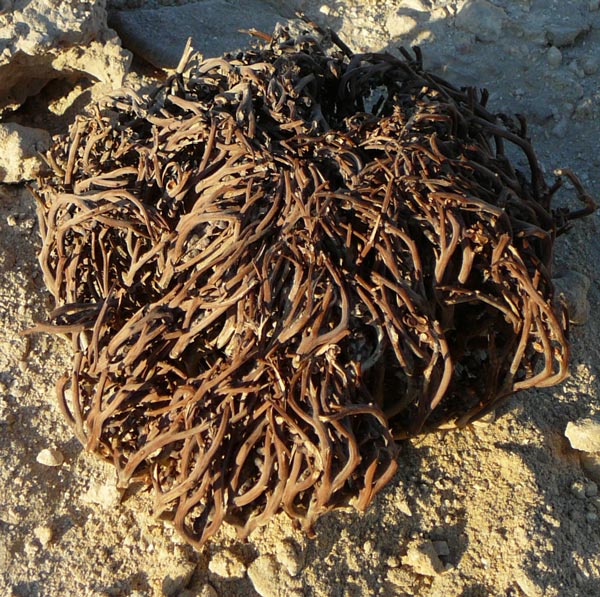
General Description
The plant is a small gray annual herb that rarely grows above 15 centimetres (6 in) high, and bears minute white flowers. It is a capable of hygroscopic expansion and retraction. However, it is not a true resurrection plant, because the plant’s dead tissues do not revive and turn green.
Family Context
The Brassicaceae family is widely distributed in temperate regions. Notable medicinal members include:
- Radish — 63 documented uses
- Shepherd’s Purse — 49 documented uses
- Berro — 45 documented uses
- Garden Cress — 39 documented uses
Geographic Distribution
Jericho Rose has been recorded in 10 countries and territories worldwide, including United Arab Emirates, Algeria, Egypt, Israel, Morocco, and others.
Active Compounds
Phytochemical research has identified 25 compounds in this species, including a diverse array of phytochemical classes (see the Complete Chemical Inventory below for the full list).
The identified compounds include the following categories:
- Flavonoid: antioxidant compounds that protect cells from oxidative damage
- Sterol: cholesterol-like compounds with anti-inflammatory properties
- Alkaloid: nitrogenous compounds with diverse pharmacological activities