Botanical Overview
Anabasis (Anabasis aphylla) is a species in the Chenopodiaceae family. This species belongs to the Chenopodiaceae family, a group of flowering plants. Although comprehensive ethnobotanical records are limited, phytochemical studies have identified 30 compounds in this species, suggesting potential medicinal value.
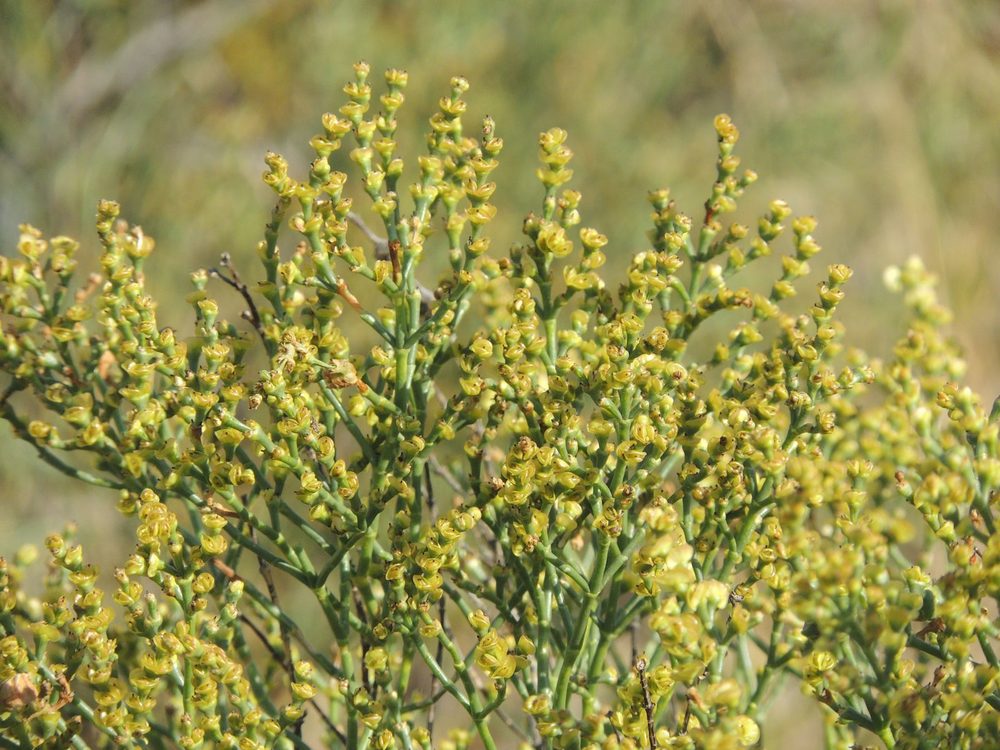
General Description
A many-branched shrub usually found growing in alluvial fans and dune swales, it is sometimes planted to catch blowing soil and stabilize sand dunes. The alkaloid anabasine was named for this toxic species, from which it was first isolated by Orechoff and Menschikoff in the year 1931. Anabasine was widely used as an insecticide in the former Soviet Union until 1970.
Family Context
The Chenopodiaceae family is widely distributed. Notable medicinal members include:
- Epazote — 45 documented uses
- Lambsquarter — 20 documented uses
- Spinach — 18 documented uses
- Beet — 15 documented uses
Geographic Distribution
Anabasis has been recorded in 10 countries and territories worldwide, including Azerbaijan, China, Iran, Kazakhstan, Morocco, and others.
Active Compounds
Phytochemical research has identified 30 compounds in this species, including a diverse array of phytochemical classes (see the Complete Chemical Inventory below for the full list).
The identified compounds include the following categories:
- Alkaloid: nitrogenous compounds with diverse pharmacological activities
Research Status
Although this species has documented phytochemical constituents, its ethnobotanical and clinical documentation remains incomplete. The limited documentation available for this species represents an opportunity for ethnobotanical research.