Botanical Overview
Ragweed (Ambrosia acanthicarpa) is a species in the Asteraceae family. The daisy family (Asteraceae) is one of the largest plant families, characterized by composite flower heads (capitula) that contain many small florets surrounded by bracts. Plants range from tiny alpine herbs to large tropical trees. The family includes many medicinally important species with bitter compounds and essential oils. Phytochemical data for this species are limited at present.
General Description
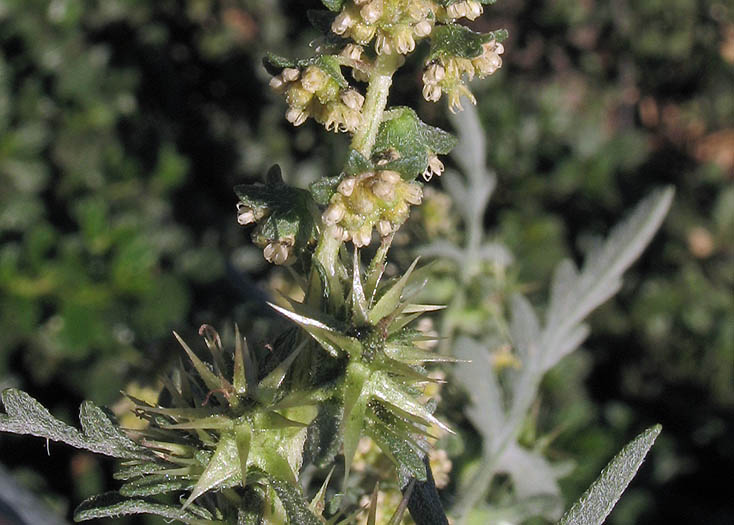
Members of the genus Ambrosia are called ragweeds. The species has common names including flatspine bur ragweed, Hooker’s bur-ragweed, annual burrweed, annual bur-sage, and western sand-bur. The plant is common across much of the western United States and in the Prairie Provinces of Canada. This spiny, weedy plant grows in clumps of many erect stems which may reach over a meter in height. Its gray-green stems are covered in a coat of stiff, bristly hairs. The few rough leaves are several centimeters long. The racemes of flowers are more plentiful, with each hairy flower head a few millimeters wide. The spiny, burr-like pistillate heads have pointed, twisting bracts and the staminate heads are rounded. The species is adaptable and grows well in disturbed areas, easily becoming weedy.
Family Context
The Asteraceae family is extremely large and diverse. Notable medicinal members include:
- Yarrow — 63 documented uses
- Gobo — 63 documented uses
- Mugwort — 55 documented uses
- Sunflower — 52 documented uses
Geographic Distribution
Ragweed has been recorded in Armenia, Canada, Mexico, United States, and ZZ.
Active Compounds
Phytochemical research has identified 2 compounds in this species: chamissonin, chamissonin-diacetate.
Research Status
Although this species has documented phytochemical constituents, its ethnobotanical and clinical documentation remains incomplete. Additional phytochemical investigation could identify novel bioactive compounds in this plant.