Botanical Overview
Alyxia buxifolia is a species in the Apocynaceae family. The dogbane family (Apocynaceae) includes herbs, shrubs, vines, and trees with milky sap containing alkaloids and cardiac glycosides. The flowers are typically five-petaled and often showy with a tubular corolla. Many species in this family are highly toxic but also source of important cardiac medications. Phytochemical data for this species are limited at present.
General Description
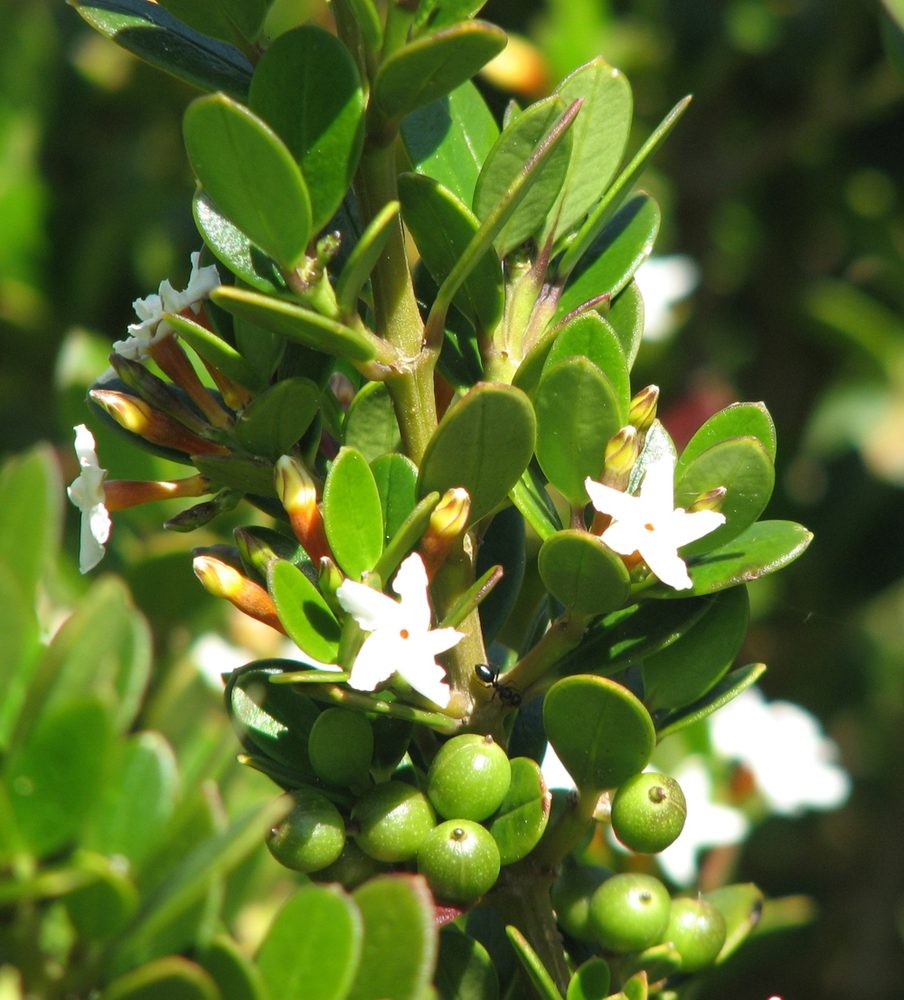
Alyxia buxifolia has medium to dark green foliage consisting of small, fleshy leaves. The flowers are small and twisted anticlockwise in a star shape. They are orange at the base of the petal and are a white-cream colour at the tip of the petal. It flowers in spring through to autumn. Alyxia buxifolia produces small fruits that are red to orange in colour when ripe. Alyxia buxifolia has several synonyms though the current accepted name is Alyxia buxifolia R. Br. It is found naturally occurring throughout southern Australia and can be found in Western Australia, South Australia, Victoria, Tasmania, New South Wales. Alyxia buxifolia occurs in coastal regions, often being found in scrub and heathland ecosystems. It can grow in many types of soils and is considered a hardy plant due to being tolerant of wind, salt, and some frost conditions. Alyxia buxifolia also creates habitat for small animals and provides food for birds and invertebrates. The shrub also contains several compounds of interest which include oleanolic acids, ursolic acids, and betulinic acid. It is used in many horticultural and landscape settings. It was also used by First Nations people of Australia to treat dysentery. Alyxia buxifolia is currently considered not to be under threat.
Family Context
The Apocynaceae family is primarily tropical and subtropical. Notable medicinal members include:
- Alstonia scholaris — 42 documented uses
- Madagascar Periwinkle — 40 documented uses
- Oleander — 30 documented uses
- African Snakeroot — 28 documented uses
Geographic Distribution
Alyxia buxifolia has been recorded in Australia, Brazil, Italy, New Zealand, and ZZ.
Active Compounds
Phytochemical research has identified 1 compound in this species: betulinic-acid.
Research Status
Although this species has documented phytochemical constituents, its ethnobotanical and clinical documentation remains incomplete. Additional phytochemical investigation could identify novel bioactive compounds in this plant.