Mud Plantain

Also known as: Tse-Hsieh, Water Plantain, Ze-Xie

Botanical Overview

Mud Plantain (Alisma plantago-aquatica) is a flowering plant in the Alismataceae family. The traditional uses of this species reflect its genuine medicinal value, validated by generations of practical experience. This species belongs to the Alismataceae family, a group of flowering plants.
General Description

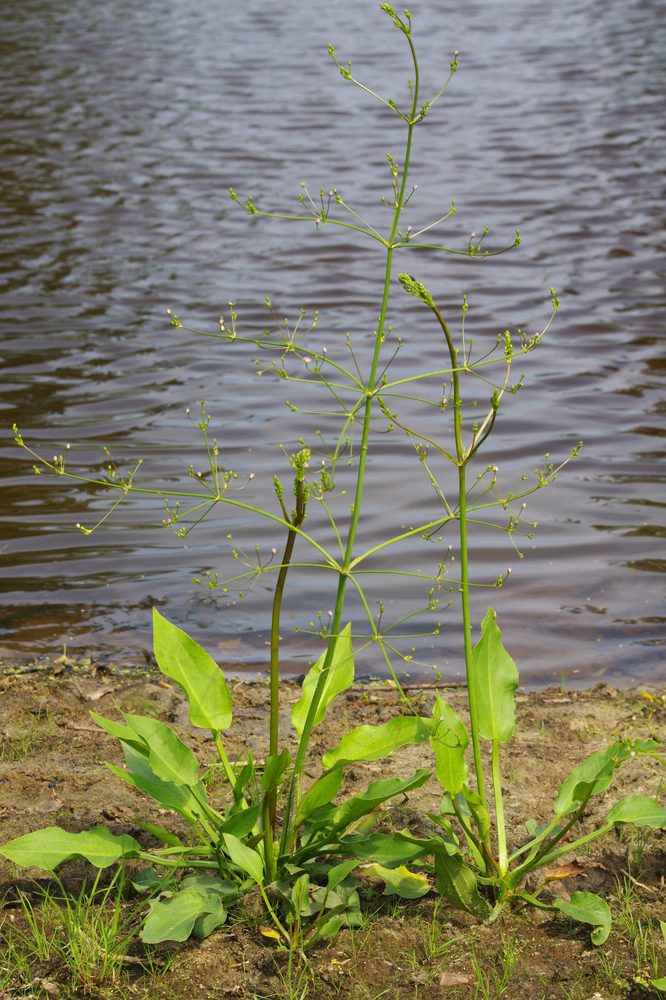
Alisma plantago-aquatica, also known as European water-plantain, common water-plantain or mad-dog weed, is a perennial flowering aquatic plant widespread across most of Europe and Asia, and apparently spread elsewhere in both the Old and New World.

ⓘ Information
Description adapted from Wikipedia (CC BY-SA 4.0).

Geographic Distribution

Mud Plantain has been recorded in 10 countries and territories worldwide, including Belgium, Switzerland, Germany, Denmark, Finland, and others.

Traditional Uses

Mud Plantain has been traditionally used for urinary tract health, pain and inflammation, and nervous system disorders, among other applications.

Urinary tract health.

  • Diuretic
  • Edema
  • Nephritis

Urinary tract applications typically involve drinking the herb as a mild tea, which increases urine production and helps flush the urinary system. It may be combined with other demulcent herbs to soothe irritated tissues.

Pain and inflammation.

  • Lumbago

For pain and inflammation, preparations are applied both topically as compresses and taken internally. A warm poultice draws blood to the area and promotes healing, while internal preparations address systemic inflammation.

Nervous system disorders.

  • Vertigo

Nervous system support involves taking the herb as a warm tea, often in the evening or before bed. The calming compounds interact with neurotransmitter systems to promote relaxation and restful sleep.

Active Compounds

Phytochemical research has identified 30 compounds in this species, including a diverse array of phytochemical classes (see the Complete Chemical Inventory below for the full list).

The identified compounds include the following categories:

  • Sterol: cholesterol-like compounds with anti-inflammatory properties
  • Alkaloid: nitrogenous compounds with diverse pharmacological activities
ⓘ Information
Information on this page is compiled from Dr. Duke’s Phytochemical and Ethnobotanical Databases (USDA ARS), a public domain resource. Consult a healthcare professional before using any herbal preparation.
⚠ Caution
Traditional records: This plant has documented uses including Poison. Self-medication with herbs carries risks including allergic reactions, drug interactions, and toxicity. Only use under the supervision of a qualified healthcare professional.

Distribution and Conservation

Reported distribution: Belgium, Switzerland, Germany, Denmark, Finland, France, United Kingdom, Netherlands, Russia, Sweden.

Complete Use Records

CategoryCultural Context
AstringentEgypt
DiureticEgypt
DysuriaChina
EdemaChina
EjaculationChina
HypercholesterolemiaChina
HyperglycemiaChina
HypertensionChina
LactifugeSpain
PoisonEgypt
TumorEurope
VenerealChina
VertigoChina
BactericideChina
Cancer(Stomach)Europe
LeukemiaChina
LumbagoChina
NephritisEgypt
RabiesEgypt
ScurvyEgypt

Complete Chemical Inventory

CompoundFormulaMW
16-BETA-HYDROXYALISOL-B-MONOACETATE
16-BETA-METHOXYALISOL-B-MONOACETATE
ACETYLALISOLS
ACETYLVALINEC₇H₁₃NO₃159.18 Da
ADENOSINE-5'-PHOSPHOSULFATE-SULFOTRANSFERASE
ALISMOLC₁₅H₂₄O220.35 Da
ALISMOXIDEC₁₅H₂₆O₂238.37 Da
ALISOL-AC₃₀H₅₀O₅490.7 Da
ALISOL-A-MONOACETATEC₃₂H₅₂O₆532.8 Da
ALISOL-BC₃₀H₄₈O₄472.7 Da
ALISOL-B-MONOACETATEC₃₂H₅₀O₅514.7 Da
ALISOL-CC₃₀H₄₆O₅486.7 Da
ALISOL-C-MONOACETATEC₃₂H₄₈O₆528.7 Da
ARABINOSEC₅H₁₀O₅150.13 Da
ARSENICAs74.92159 Da
ASPARAGINEC₄H₈N₂O₃132.12 Da
BETA-SITOSTEROLC₂₉H₅₀O414.7 Da
CALCIUMCa40.08 Da
CHOLINEC₅H₁₄NO+104.17 Da
CHRYSOERIOLC₁₆H₁₂O₆300.26 Da
COPPERCu63.55 Da
CYTIDINEC₉H₁₃N₃O₅243.22 Da
D-FRUCTOSEC₆H₁₂O₆180.16 Da
D-GLUCOSEC₆H₁₂O₆180.16 Da
EPIALISOL-A
FATC₁₆H₃₂O₂256.42 Da
FURFURALDEHYDEC₅H₄O₂96.08 Da
GALACTOSEC₆H₁₂O₆180.16 Da
GUANIDINECH₅N₃59.07 Da
IRONFe55.84 Da

Data from PubChem (NIH/NLM, public domain).


References & Further Reading

External Research Links

Data Sources