Botanical Overview
Albizia procera belongs to the Fabaceae family. Limited but reliable traditional records indicate this plant has recognized medicinal applications in one or more healing traditions. The legume family (Fabaceae) includes trees, shrubs, and herbs that produce pods (legumes) and form nitrogen-fixing root nodules through symbiosis with bacteria. The flowers are typically pea-shaped with five petals. This large family provides food staples, timber, and numerous medicinal species.
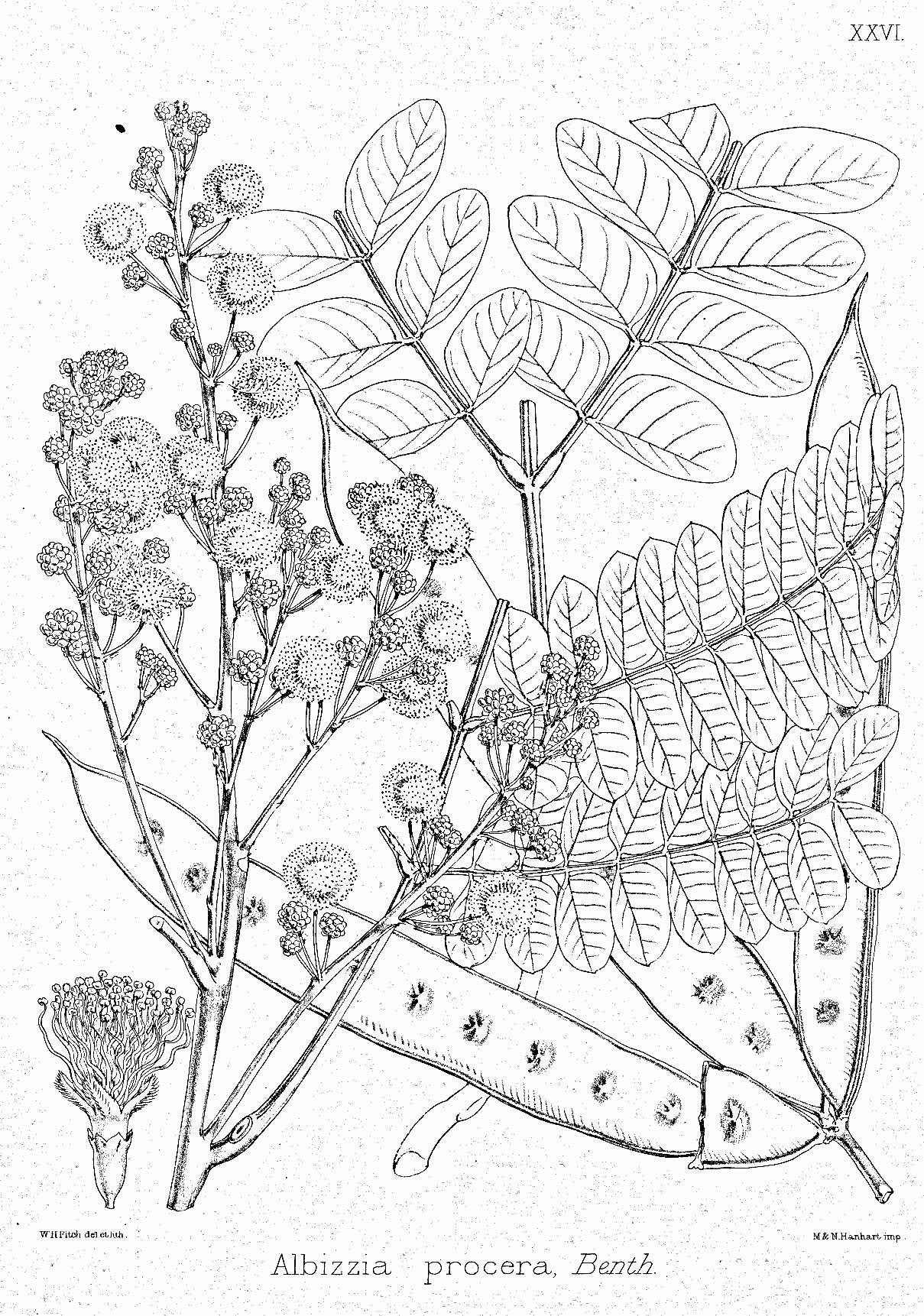
General Description
It is most commonly found in open forests, but may also be found on the margins of rain forests and in monsoon and gallery forests. It is considered an invasive species in South Africa.
Family Context
The Fabaceae family is large and globally distributed. Notable medicinal members include:
- Soybean — 76 documented uses
- Crab’s Eye — 73 documented uses
- Tamarind — 59 documented uses
- Common Indigo — 51 documented uses
Geographic Distribution
Albizia procera has been recorded in 10 countries and territories worldwide, including Australia, China, Indonesia, India, Papua New Guinea, and others.
Active Compounds
Phytochemical research has identified 1 compound in this species: genistein.