Botanical Overview
Aglaonema aroid (Aglaonema commutatum) is a species in the Araceae family. The arum family (Araceae) includes herbs, climbers, and aquatics with a distinctive inflorescence consisting of a fleshy spike (spadix) surrounded by a modified leaf (spathe). Many species produce calcium oxalate crystals and acrid compounds that cause intense irritation. Despite this, several are used medicinally after proper preparation. Although comprehensive ethnobotanical records are limited, phytochemical studies have identified 9 compounds in this species, suggesting potential medicinal value.
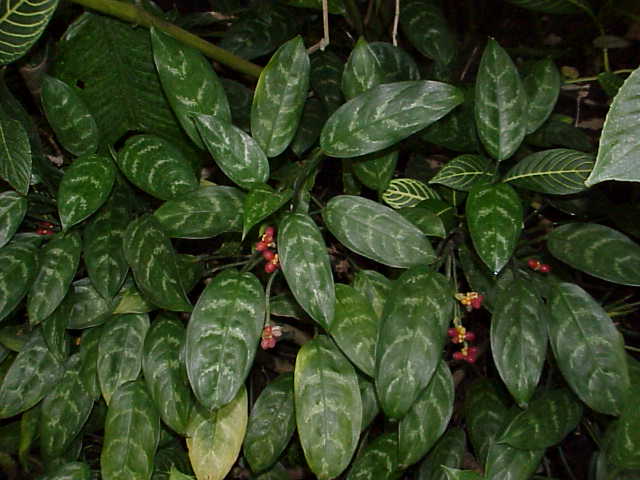
General Description
It is native to the Philippines and northeastern Sulawesi, and has been introduced to other tropical locales, including Cuba, Puerto Rico, Trinidad and Tobago, Comoros, the Chagos Archipelago, India, Bangladesh, and the Cook Islands. Its hybrid cultivar ‘Silver Queen’ has gained the Royal Horticultural Society’s Award of Garden Merit as a houseplant.
Family Context
The Araceae family is widely distributed. Notable medicinal members include:
- Jack-In-The-Pulpit — 34 documented uses
- Taro — 34 documented uses
- Skunk Cabbage — 33 documented uses
- Dumbcane — 27 documented uses
Geographic Distribution
Aglaonema aroid has been recorded in 10 countries and territories worldwide, including Brazil, Cook Islands, Colombia, Costa Rica, Indonesia, and others.
Active Compounds
Phytochemical research has identified 9 compounds in this species, including a diverse array of phytochemical classes (see the Complete Chemical Inventory below for the full list).
Research Status
Although this species has documented phytochemical constituents, its ethnobotanical and clinical documentation remains incomplete. Systematic pharmacological studies are needed to validate the traditional uses attributed to this species.