Botanical Overview
Aglaia edulis is a species in the Meliaceae family. The mahogany family (Meliaceae) includes trees and shrubs with compound leaves and small flowers arranged in branched inflorescences. The fruits are capsules, drupes, or berries. Many species contain limonoid triterpenes with potent insecticidal and antifeedant properties, including azadirachtin from neem. Phytochemical data for this species are limited at present.
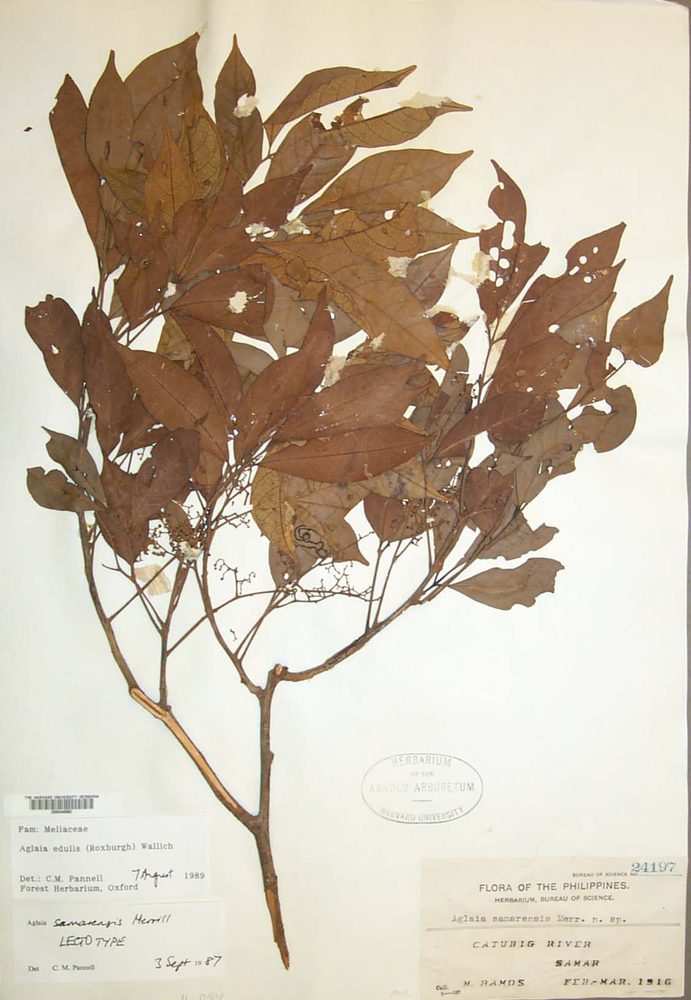
General Description
It occurs in Tropical Asia from India to Yunnan and South-Central China. The wood and timber are used for various purposes.
Family Context
The Meliaceae family is widely distributed. Notable medicinal members include:
- Chinaberry — 54 documented uses
- Neem — 49 documented uses
- Andiroba — 17 documented uses
- Jojoban — 16 documented uses
Geographic Distribution
Aglaia edulis has been recorded in 10 countries and territories worldwide, including China, Indonesia, India, Cambodia, Malaysia, and others.
Active Compounds
Phytochemical research has identified 4 compounds in this species, including a diverse array of phytochemical classes (see the Complete Chemical Inventory below for the full list).
The identified compounds include the following categories:
- Alkaloid: nitrogenous compounds with diverse pharmacological activities
Research Status
Although this species has documented phytochemical constituents, its ethnobotanical and clinical documentation remains incomplete. Additional phytochemical investigation could identify novel bioactive compounds in this plant.