Botanical Overview
Buchu (Agathosma betulina) is a species in the Rutaceae family. The citrus family (Rutaceae) includes trees and shrubs with gland-dotted leaves that release aromatic oils when crushed. The flowers are typically white with four or five petals, and the fruits are often modified berries with a leathery rind. Most species produce alkaloids and limonoids with medicinal activity. Although comprehensive ethnobotanical records are limited, phytochemical studies have identified 30 compounds in this species, suggesting potential medicinal value.
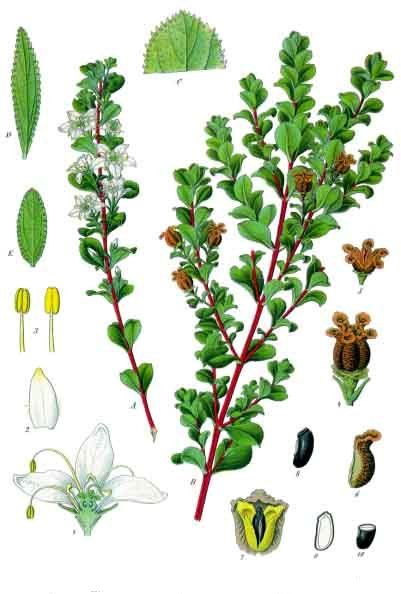
General Description
Agathosma betulina (previously Barosma betulina) is a flowering plant in the family Rutaceae, native to the lower elevation mountains of western South Africa, where it occurs near streams in fynbos habitats.
Family Context
The Rutaceae family is primarily tropical and subtropical. Notable medicinal members include:
- Kabusu — 76 documented uses
- Petitgrain — 76 documented uses
- Rue — 54 documented uses
- Orange — 47 documented uses
Geographic Distribution
Buchu has been recorded in United States, South Africa, and ZZ.
Active Compounds
Phytochemical research has identified 30 compounds in this species, including a diverse array of phytochemical classes (see the Complete Chemical Inventory below for the full list).
The identified compounds include the following categories:
- Phenolic: antioxidant compounds that neutralize free radicals
- Alkaloid: nitrogenous compounds with diverse pharmacological activities
Research Status
Although this species has documented phytochemical constituents, its ethnobotanical and clinical documentation remains incomplete. Additional phytochemical investigation could identify novel bioactive compounds in this plant.