Botanical Overview
Abies spectabilis belongs to the Pinaceae family. Limited but reliable traditional records indicate this plant has recognized medicinal applications in one or more healing traditions. The pine family (Pinaceae) includes coniferous trees with needle-like leaves arranged in bundles or spirally along the branches. They produce male and female cones and are wind-pollinated. The resin contains turpentine and other terpenes with traditional medicinal uses for respiratory conditions.
General Description
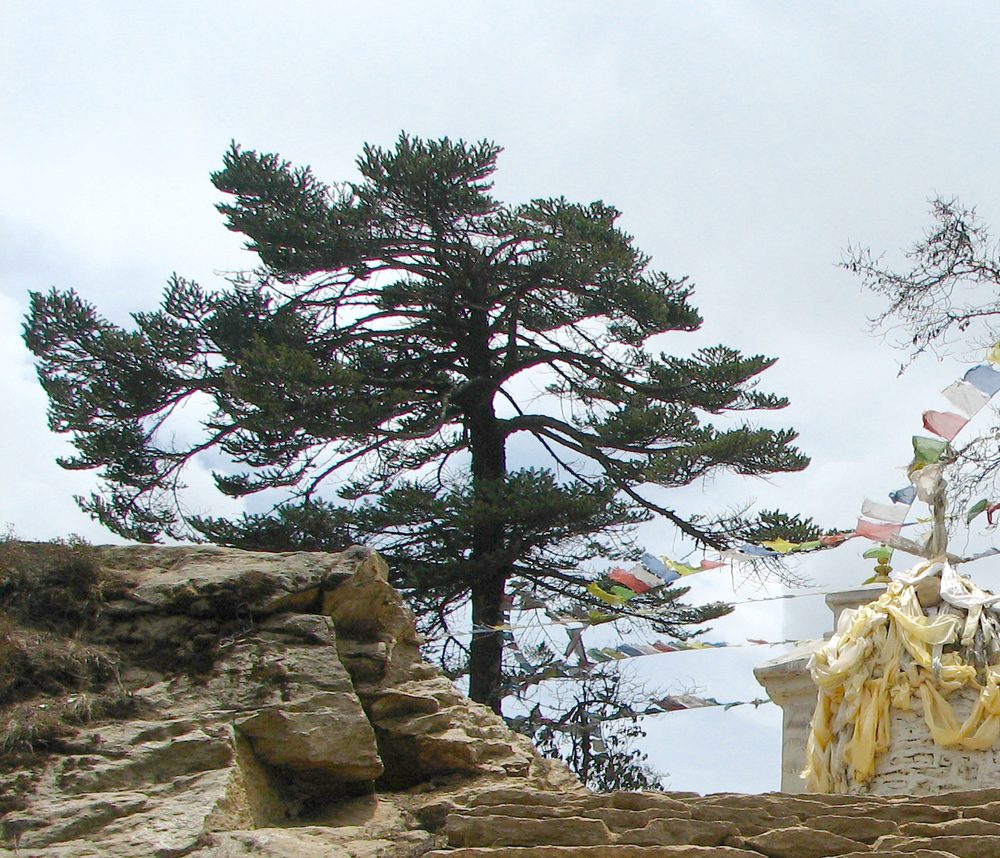
It is sometimes held to include the Bhutan fir (A. densa) as a variety. It is found in Afghanistan, China (Tibet), northern India, Nepal, and Pakistan. It is a large tree, up to 50 m (160 ft) tall. Abies spectabilis has a wide distribution, but it has suffered from logging and deforestation, especially at the lower elevations. In 2011, IUCN assessed it as “Near Threatened”. Abies spectabilis occurs most commonly in mountains between 1600 and 4000 meters high, especially in the Himalayas. While it does appear in strips of its kind, it is more common to find Abies spectabilis around other similar trees, such as Abies pindrow and Abies densa. Abies spectabilis is commonly confused with Abies densa. It functions best in cold and wet climates. Abies spectabilis has been brought to places outside where it originated due to humans, and while it failed to take root in North America, it can be found in the UK and Ireland, though it does not always last in the heat of summer.
Family Context
The Pinaceae family is widely distributed in the Northern Hemisphere. Notable medicinal members include:
- Longleaf Pine — 29 documented uses
- Chir Pine — 27 documented uses
- Silver-Fir — 20 documented uses
- Pinyon Pine — 15 documented uses
Geographic Distribution
Abies spectabilis has been recorded in 10 countries and territories worldwide, including Bhutan, China, Spain, France, United Kingdom, and others.
Traditional Uses
Abies spectabilis has been traditionally used for digestive health and respiratory conditions.
Digestive health.
- Stomachic
For digestive complaints, the herb is typically prepared as a tea or decoction taken before meals. The bitter compounds stimulate digestive secretions and improve nutrient absorption. Some traditions use the powdered root or leaves in small doses as a stomachic tonic.
Respiratory conditions.
- Asthma
Respiratory conditions are addressed through steam inhalation of the herb’s vapors or internal use as a warm tea. The hot infusion acts as an expectorant, helping to loosen phlegm and clear congestion. Some traditions combine it with honey for coughs.
Active Compounds
Phytochemical research has identified 19 compounds in this species, including a diverse array of phytochemical classes (see the Complete Chemical Inventory below for the full list).
The identified compounds include the following categories:
- Flavonoid: antioxidant compounds that protect cells from oxidative damage
- Sterol: cholesterol-like compounds with anti-inflammatory properties
- Alkaloid: nitrogenous compounds with diverse pharmacological activities