Botanical Overview
Japanese Fir (Abies sachalinensis) is a species in the Pinaceae family. The pine family (Pinaceae) includes coniferous trees with needle-like leaves arranged in bundles or spirally along the branches. They produce male and female cones and are wind-pollinated. The resin contains turpentine and other terpenes with traditional medicinal uses for respiratory conditions. Phytochemical data for this species are limited at present.
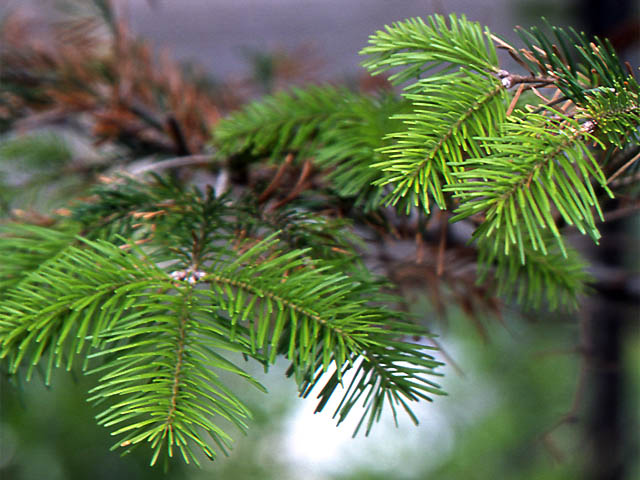
General Description
It is found in Sakhalin island and southern Kurils (Russia), and also in northern Hokkaido (Japan). The first discovery by a European was by Carl Friedrich Schmidt (1832-1908), the Baltic German botanist, on the Russian island of Sakhalin in 1866, but he did not introduce it to Europe. The plant was re-discovered by the English plant-collector, Charles Maries in 1877 near Aomori on the main Japanese island of Honshū, who initially thought it to be a variety of Abies veitchii. Abies nephrolepis (khingan fir) is known to be the closest relative, which exists on the mainland just west of the range of Sakhalin fir.
Family Context
The Pinaceae family is widely distributed in the Northern Hemisphere. Notable medicinal members include:
- Longleaf Pine — 29 documented uses
- Chir Pine — 27 documented uses
- Silver-Fir — 20 documented uses
- Pinyon Pine — 15 documented uses
Geographic Distribution
Japanese Fir has been recorded in 10 countries and territories worldwide, including Belgium, Estonia, Finland, Japan, South Korea, and others.
Active Compounds
Phytochemical research has identified 4 compounds in this species, including a diverse array of phytochemical classes (see the Complete Chemical Inventory below for the full list).
The identified compounds include the following categories:
- Alkaloid: nitrogenous compounds with diverse pharmacological activities
Research Status
Although this species has documented phytochemical constituents, its ethnobotanical and clinical documentation remains incomplete. Additional phytochemical investigation could identify novel bioactive compounds in this plant.