The reproductive system is the only organ system that is fundamentally different between males and females. Its primary functions are the production of gametes (sperm and ova), the transport and union of these gametes, and — in females — the support of the developing embryo and fetus.
Male Reproductive System
The male reproductive system is designed to produce, store, and deliver sperm. The organs form a continuous duct system from the testis to the urethra.
Testes
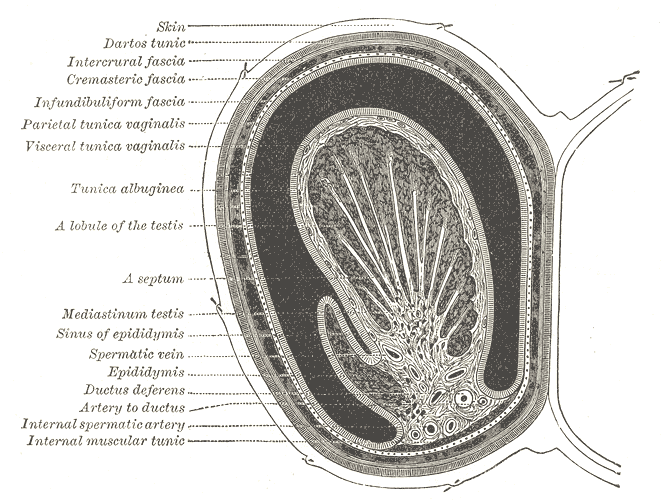
The testes (testicles) are paired oval organs (approximately 4–5 cm long) suspended in the scrotum, which keeps them at approximately 34°C — 2–3°C below core body temperature, essential for spermatogenesis.
Each testis is surrounded by the tunica vaginalis (serous membrane) and the tunica albuginea (dense fibrous capsule). Septa from the tunica albuginea divide the testis into approximately 250 lobules, each containing 1–4 seminiferous tubules.
Seminiferous tubules. The functional units of the testis. Each tubule is lined by a specialized stratified epithelium containing:
- Spermatogenic cells. Arrange in concentric layers from the basement membrane to the lumen, reflecting progressive stages of spermatogenesis: spermatogonia (stem cells) → primary spermatocytes → secondary spermatocytes → spermatids → spermatozoa.
- Sertoli cells (sustentacular cells). Tall columnar cells that support, nourish, and regulate developing sperm cells. They form the blood-testis barrier via tight junctions, create a specialized microenvironment for spermatogenesis, secrete inhibin (feedback inhibition of FSH), and produce anti-Müllerian hormone during development.
Interstitial tissue. Between the seminiferous tubules lie:
- Leydig cells (interstitial cells). Produce testosterone under the influence of luteinizing hormone (LH) from the pituitary.
- Blood vessels, lymphatics, and connective tissue.
Duct System
Tubuli recti. Short straight tubules connecting the seminiferous tubules to the rete testis.
Rete testis. A network of channels in the mediastinum testis that collects sperm from the seminiferous tubules.
Efferent ductules. 10–20 small ducts that carry sperm from the rete testis to the epididymis.
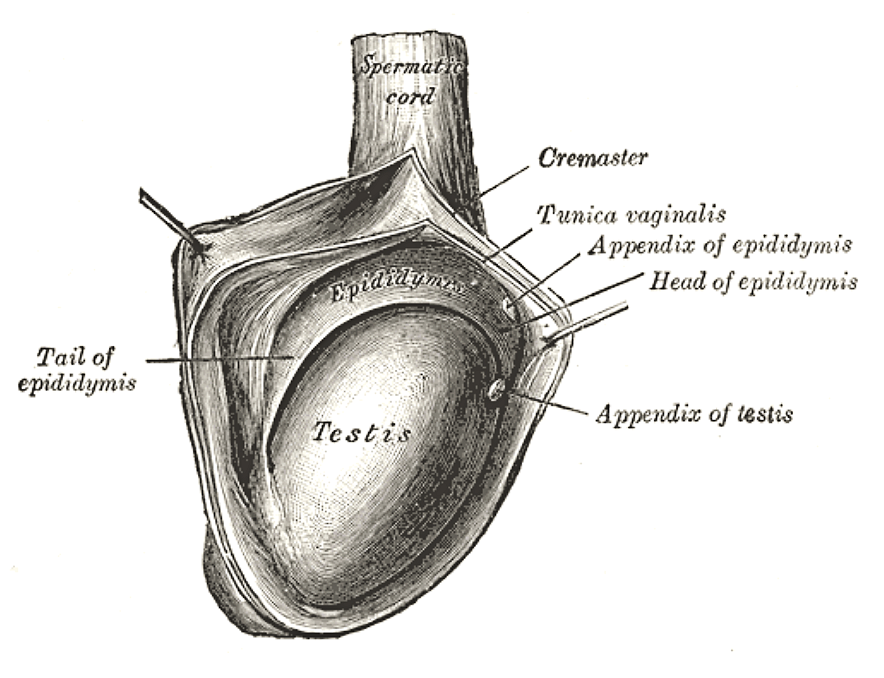
Epididymis. A single, highly coiled duct (approximately 6–7 meters long) running along the posterior border of the testis. It is divided into three regions: head (receives sperm), body (where sperm mature and become motile), and tail (storage). Sperm spend 10–14 days in the epididymis, during which they acquire motility and the ability to fertilize an ovum.
Vas deferens (ductus deferens). A thick-walled muscular tube (approximately 45 cm long) that carries sperm from the tail of the epididymis to the ejaculatory duct. It ascends from the scrotum through the inguinal canal as part of the spermatic cord, passes along the lateral pelvic wall, and crosses superior to the ureter to reach the prostate. On digital rectal examination, the vas can be palpated as a firm cord.
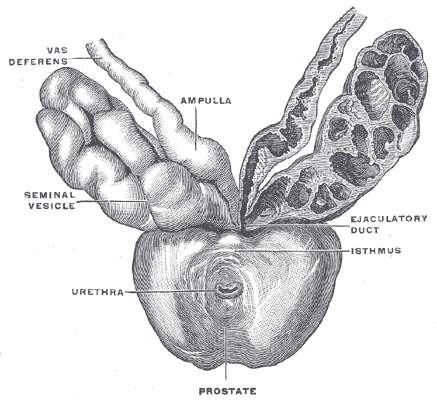
Ejaculatory duct. Formed by the union of the vas deferens and the duct of the seminal vesicle. It passes through the prostate and empties into the prostatic urethra. During ejaculation, peristaltic contractions propel sperm through the duct.
Urethra. The male urethra (18–20 cm) serves both urinary and reproductive functions. It is divided into three parts: prostatic (through the prostate), membranous (through the urogenital diaphragm), and penile (spongy).
Accessory Glands
Seminal vesicles. Paired, sac-like glands (approximately 5 cm long) lying posterior to the bladder. They secrete a thick, alkaline, fructose-rich fluid that constitutes approximately 60–70% of semen volume. Fructose provides energy for sperm; prostaglandins stimulate uterine contractions; and the alkaline pH neutralizes the acidity of the female reproductive tract.
Prostate gland. A chestnut-shaped gland (approximately 3 cm long, 20 g) surrounding the prostatic urethra. It secretes a thin, milky, alkaline fluid (20–30% of semen) containing citric acid, acid phosphatase, prostate-specific antigen (PSA), and zinc. PSA liquefies the semen after ejaculation, freeing sperm to swim.
Bulbourethral glands (Cowper glands). Paired small glands (approximately 1 cm) in the urogenital diaphragm. They secrete a small amount of pre-ejaculatory mucus that lubricates the urethra and neutralizes residual urine acidity.
External Genitalia
Penis. The male copulatory organ, composed of three cylindrical erectile bodies: two corpora cavernosa (dorsal) and one corpus spongiosum (ventral, surrounding the urethra). During sexual arousal, parasympathetic stimulation releases nitric oxide, causing vasodilation of the helicine arteries. Blood fills the cavernous sinuses, engorging the erectile tissue and compressing venous outflow, producing an erection. The glans penis is the expanded distal end of the corpus spongiosum, covered by the prepuce (foreskin) in uncircumcised males.
Scrotum. A pouch of skin and dartos muscle (smooth muscle) containing the testes and epididymides. The scrotum is divided by a midline raphe. The cremaster muscle (striated muscle, derived from the internal oblique) elevates the testes in response to cold or arousal. The pampiniform plexus of veins cools arterial blood through countercurrent heat exchange.
Female Reproductive System
The female reproductive system produces ova, receives sperm, supports fertilization and embryonic development, and nourishes the newborn through milk production.
Ovaries
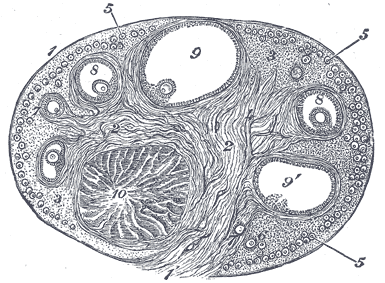
The ovaries are paired almond-shaped organs (approximately 3 × 1.5 × 1 cm) located on either side of the uterus, attached to the broad ligament by the mesovarium. Each ovary is covered by a surface epithelium (germinal epithelium) and contains:
- Cortex. The outer region, containing ovarian follicles at various stages of development.
- Medulla. The inner region, containing blood vessels, lymphatics, and nerves.
Ovarian follicles. Oocytes develop within follicles. At birth, each ovary contains approximately 1–2 million primordial follicles. By puberty, only about 300,000–400,000 remain. Throughout reproductive life, only about 400–500 will ovulate. The stages of follicular development are:
- Primordial follicle. Primary oocyte (arrested in prophase I) surrounded by a single layer of flattened granulosa cells.
- Primary (preantral) follicle. The oocyte enlarges, granulosa cells become cuboidal and proliferate, and the zona pellucida (glycoprotein layer) forms.
- Secondary (antral) follicle. Follicular fluid accumulates, forming an antrum. Theca interna develops around the follicle and produces androgens.
- Graafian (mature) follicle. A large (20–25 mm) fluid-filled follicle bulging from the ovarian surface. The oocyte completes meiosis I and arrests at metaphase II.
- Corpus luteum. After ovulation, the ruptured follicle collapses and transforms into the corpus luteum, a temporary endocrine gland that secretes progesterone. If pregnancy does not occur, it degenerates into the corpus albicans. If pregnancy occurs, human chorionic gonadotropin (hCG) from the developing placenta maintains the corpus luteum.
Fallopian Tubes (Uterine Tubes)
Each fallopian tube (approximately 10–12 cm long) extends from the ovary to the uterus. It has four segments:
- Infundibulum. The funnel-shaped distal end with fimbriae that sweep over the ovary and capture the ovulated oocyte.
- Ampulla. The widest and longest segment. Fertilization typically occurs here.
- Isthmus. The narrow segment connecting to the uterus.
- Intramural (interstitial) segment. Passes through the uterine wall.
The tubal lining has ciliated columnar cells (whose cilia beat toward the uterus) and secretory cells (which nourish the oocyte and sperm). The ovum is transported through the tube over 3–4 days.
Uterus
The uterus is a pear-shaped, thick-walled muscular organ (approximately 7.5 × 5 × 2.5 cm in a nulliparous woman) in the pelvic cavity, between the bladder (anterior) and the rectum (posterior). It is divided into:
- Fundus. The domed upper portion above the entrance of the fallopian tubes.
- Body (corpus). The main portion.
- Cervix. The narrow lower portion (approximately 2.5 cm) that projects into the vagina. The internal os opens into the uterine cavity; the external os opens into the vagina.
Uterine wall layers:
- Perimetrium (serosa). The outer peritoneal covering.
- Myometrium. The thick middle layer of smooth muscle. It undergoes rhythmic contractions during menstruation (dysmenorrhea when excessive) and powerful coordinated contractions during labor. The myometrium is capable of remarkable stretch, accommodating a full-term fetus.
- Endometrium. The inner mucosal lining. It has two layers: the functional layer (stratum functionalis), which is shed during menstruation and regenerates from the basal layer (stratum basalis).
The endometrium undergoes cyclical changes during the menstrual cycle in response to ovarian hormones:
- Proliferative (follicular) phase (days 1–14, variable). Estrogen from the developing follicle stimulates endometrial thickening and proliferation of glands and blood vessels.
- Secretory (luteal) phase (days 15–28). Progesterone from the corpus luteum converts the endometrium to a secretory state, with glycogen-rich glands and increased vascularity, preparing for implantation.
- Menstrual phase (days 1–5). If implantation does not occur, the corpus luteum degenerates, progesterone falls, and the functional layer of the endometrium is shed.
Vagina
The vagina is a fibromuscular tube (approximately 8–10 cm long) extending from the cervix to the external vaginal orifice. It serves as the receptacle for semen, the birth canal, and the passage for menstrual flow. The vaginal wall has three layers:
- Mucosa. Stratified squamous non-keratinized epithelium, rich in glycogen. Lactobacillus acidophilus in the vagina metabolizes glycogen to lactic acid, maintaining an acidic pH (3.8–4.5) that discourages pathogen growth.
- Muscularis. Smooth muscle arranged in inner circular and outer longitudinal layers.
- Adventitia. Fibrous connective tissue.
The hymen is a thin mucosal fold at the vaginal introitus. It is usually perforate and may be torn by first intercourse, tampon use, or physical activity.
External Genitalia (Vulva)
The vulva includes:
- Mons pubis. Fatty pad over the pubic symphysis, covered with pubic hair after puberty.
- Labia majora. Two prominent folds of skin (homologous to the scrotum). They are covered with hair on their outer surface.
- Labia minora. Two smaller hairless folds within the labia majora.
- Clitoris. An erectile organ (homologous to the penis) at the anterior junction of the labia minora. It contains two corpora cavernosa and is densely innervated, serving as the primary organ of female sexual pleasure. The prepuce covers the glans clitoris.
- Vestibule. The space between the labia minora, containing the openings of the urethra and vagina, and the ducts of Bartholin glands (greater vestibular glands), which secrete lubricating mucus.
- Vestibular bulbs. Erectile tissue (homologous to the corpus spongiosum of the penis) flanking the vaginal opening.
Mammary Glands (Breasts)
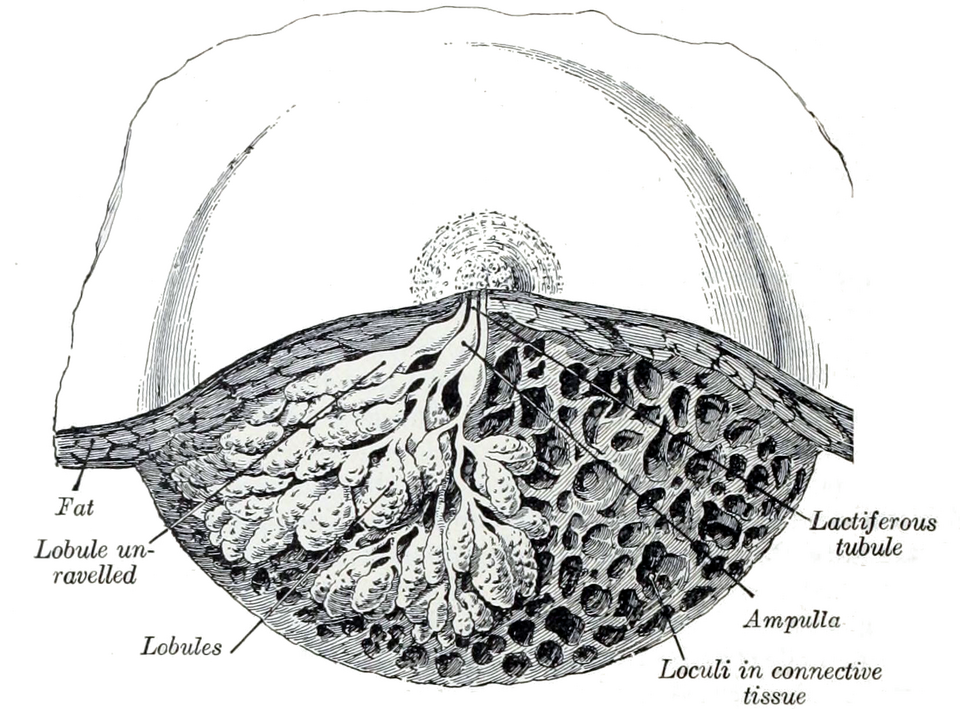
The breasts are modified sweat glands that produce milk for infant nourishment. They lie over the pectoralis major and serratus anterior muscles, extending from the 2nd to the 6th rib.
Each breast contains 15–20 lobes, each with a lactiferous duct that opens independently on the nipple. The ducts dilate into lactiferous sinuses just before the nipple. The nipple is surrounded by the pigmented areola, which contains sebaceous glands (Montgomery glands) that lubricate the nipple during breastfeeding.
Milk production is controlled by prolactin from the anterior pituitary. Milk ejection is controlled by oxytocin from the posterior pituitary, which causes myoepithelial cells around the alveoli to contract (the let-down reflex).
The Menstrual Cycle
The menstrual cycle (average 28 days, range 21–35 days) is the cyclical process by which the female body prepares for pregnancy:
Ovarian cycle:
- Follicular phase (days 1–14). FSH stimulates follicular development. One dominant follicle emerges and produces increasing amounts of estrogen.
- Ovulation (day 14). A surge of LH triggers the release of the secondary oocyte from the mature Graafian follicle.
- Luteal phase (days 15–28). The corpus luteum produces progesterone.
Uterine cycle:
- Menstrual phase (days 1–5). Shedding of the functional layer.
- Proliferative phase (days 6–14). Endometrial regeneration under estrogen.
- Secretory phase (days 15–28). Endometrial preparation under progesterone.
Summary
The male reproductive system produces sperm continuously and delivers them through a duct system with contributions from the seminal vesicles, prostate, and bulbourethral glands. The female reproductive system produces ova cyclically, captures them via the fallopian tubes, provides a site for fertilization and implantation in the uterus, and supports embryonic and fetal development. The menstrual cycle coordinates ovarian and uterine events to prepare for pregnancy. The breasts produce milk for postnatal nourishment. Understanding the anatomy of both sexes is essential for reproductive health, fertility treatment, and the diagnosis of reproductive system disorders.